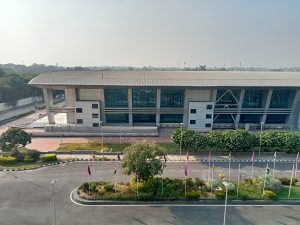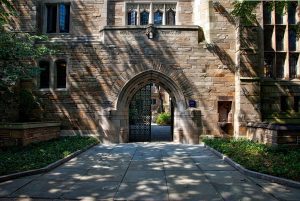


Banaras Hindu University remains one of the most aspirational destinations for undergraduate students across India, and from the 2022 cycle onwards every single UG seat at BHU has been filled exclusively through the Common University Entrance Test. If you are sitting for CUET UG 2026 between 11 May and 31 May and BHU is on your wishlist, the road from your exam centre to a Varanasi classroom has roughly seven well-defined milestones. This step-by-step guide walks you through each of them — NTA registration, CSAS portal sign-up, course preference filling, seat allotment, fee payment, and physical document verification — so nothing slips through the cracks.
Step 1: Clear CUET UG 2026 with the Right Subject Combination
BHU does not run a separate entrance test for undergraduate programmes anymore. Your CUET UG 2026 scorecard is the only qualifying credential. The NTA application window opened on 3 January 2026 and closed on 30 January 2026, and the exam itself is being conducted between 11 May and 31 May 2026 in a hybrid CBT model. Before you even think about BHU, make sure the language and domain subjects you picked while registering on cuet.nta.nic.in match what BHU prescribes for your target course. For BA (Hons) and B.Com (Hons) programmes, you must have appeared in Section IA (Hindi or English) plus the General Test in Section III. For B.Sc. (Hons) streams, the relevant domain subjects — Physics, Chemistry, Mathematics, Biology — must be on your scorecard.
If you sit for a CUET domain paper in a subject you never studied in Class 11–12, BHU will cancel your allotted seat during physical verification. This is the single biggest reason candidates lose hard-earned seats every year, so cross-check your Class 12 marksheet against your CUET subject list today. Need help mapping subjects to BHU programmes? Walk through our CUET 2026 subject combination guide before you finalise anything.
Step 2: Track Your CUET Result and Calculate Normalised Score
CUET UG 2026 results are expected in the second week of July 2026 on cuet.nta.nic.in. Download your scorecard the moment it goes live and note your normalised percentile and raw score for every subject — BHU uses subject-wise composite scores, not just an aggregate, so a stellar General Test mark cannot rescue a weak domain paper. Historical cutoff data suggests a normalised score above 600 keeps you in the running for most general-category UG seats; B.Com (Hons) demands 630+, B.Sc. (Hons) Biology and Agriculture sit at 620–660, while BA streams in Arts and Social Sciences accept scores around 500 for general category and 450 for reserved categories. Use our CUET cutoff predictor to gauge where you stand the same evening your result drops.
Step 3: Register on the BHU CSAS Portal (bhucuet.samarth.edu.in)
BHU runs its UG admissions through the Common Seat Allocation System hosted on the Samarth eGov platform at bhucuet.samarth.edu.in, with a backup landing page at bhuonline.in. Registration is expected to open in the third week of July 2026 and stay live till the first week of August. You log in using your CUET application ID and CUET roll number, after which the portal pulls your NTA scores automatically — you cannot edit them. You will then fill in personal details, parental information, communication address, and upload scanned copies of your Class X marksheet, Class XII marksheet, CUET scorecard, recent passport-size photograph, signature, and category certificate (SC, ST, OBC-NCL, EWS, or PwD) if applicable. Keep every document under 1 MB in PDF/JPG format to avoid upload failures.
Step 4: Pay the CSAS Portal Registration Fee
Once your profile is verified on the portal, you must pay a one-time, non-refundable application fee that ranges between ₹800 and ₹1,200 depending on the course basket you choose. The fee unlocks the course-preference page; without it you cannot enter even a single choice. Pay using UPI, debit card, credit card, or net-banking and download the payment receipt immediately. SC/ST/PwD candidates get a partial concession that is automatically applied if their category certificate is accepted in Step 3. Make sure the candidate name on the bank account or UPI handle matches the name on your CUET application — payment-name mismatches are flagged and rolled back.
Step 5: Fill Course and Programme Preferences
This is the most strategic step in the entire admission cycle. BHU offers roughly 9,000 UG seats spread across more than 30 undergraduate programmes — B.Sc. (Hons), B.A. (Hons), B.Com (Hons), B.A. LL.B. (via separate CLAT route, not CUET), B.F.A., B.P.A., Shastri (Hons), B.Voc., and BTech routes at IIT-BHU which run through JEE. Within the CUET pool, your faculty choices include Institute of Agricultural Science, Institute of Science, Faculty of Arts, Faculty of Commerce, Faculty of Social Science, Faculty of Sanskrit Vidya Dharma Vigyan, Faculty of Performing Arts, and Faculty of Visual Arts. List preferences in true order of liking — if you list B.Com (Hons) above B.A. (Hons) Economics, the portal will lock you into Commerce the moment your composite score crosses that cutoff, even if Economics opens up later. The general rule: stack dream courses on top, safe courses in the middle, and one absolute safety-net course at the bottom.
Step 6: Watch the Seat Allotment Rounds
BHU usually conducts three regular CSAS rounds followed by one or two spot rounds in late August and September 2026. After every round, allotment results are pushed to the dashboard you created on the CSAS portal. If you get your top preference, the system locks you in and there is no upgrade in subsequent rounds. If you get a lower preference, you can accept the seat as a “Float” or “Slide” — Float means you accept this seat but stay in the pool for higher choices, while Slide means you accept and only want to move up within the same faculty. Choose carefully: a “Freeze” decision is irreversible. The cutoffs released after the first round historically settle around the 96th–98th percentile for B.Com (Hons), 95th–98th for B.Sc. (Hons) Biology, and the 88th–92nd band for most BA programmes.
Step 7: Pay Admission Fee and Complete Physical Verification
Once you Freeze a seat, you must pay the course-specific admission fee online within the window mentioned in your allotment letter — typically 48 to 72 hours. BHU’s UG annual fees sit in a remarkably affordable bracket of ₹8,000 to ₹15,000 for arts and commerce courses and ₹12,000 to ₹20,000 for science programmes. After fee payment, the portal generates a provisional admission letter. The final step is physical document verification at the Varanasi campus — you carry originals of your Class X and XII marksheets, CUET scorecard, transfer certificate, migration certificate, character certificate, category certificate, and Aadhaar. Any mismatch between the CUET subjects you appeared in and your Class 12 board subjects will trigger cancellation right at the verification desk. Once cleared, you receive your BHU enrolment number, and you are officially a student of one of India’s most storied universities.
Reservation and Category Quotas at BHU
BHU follows the Government of India reservation matrix: 15% for SC, 7.5% for ST, 27% for OBC-NCL, 10% for EWS, and 5% horizontal reservation for PwD candidates across categories. There is no state-domicile quota — BHU admissions are pan-India and treat a candidate from Bihar, Kerala, or Mizoram on identical footing once category and CUET score are factored in. Candidates from reserved categories get a 5–10 percentage-point relaxation on the minimum Class 12 aggregate. The OBC-NCL certificate must be issued on or after 1 April 2025 to be valid for 2026 admissions; an older certificate will be rejected.
Common Pitfalls That Cost Aspirants Their BHU Seat
Every counselling cycle, hundreds of CUET high-scorers lose their BHU seat for avoidable reasons. The four most common are: (1) appearing in a CUET domain subject not studied in Class 12, (2) uploading a blurred or expired category certificate on the CSAS portal, (3) missing the admission fee payment window after seat allotment, and (4) listing course preferences in the wrong order out of confusion. Each of these is preventable with a five-minute checklist before you hit submit on any step. For a detailed pre-allotment review, run through our CUET counselling checklist.
Frequently Asked Questions
Q1. Does BHU conduct its own entrance test for UG admission in 2026?
No. From the 2022 admission cycle onwards, all UG admissions to BHU (except programmes at IIT-BHU which use JEE) are made exclusively through the CUET UG score. There is no BHU UET anymore.
Q2. What is the minimum CUET score needed to get into BHU?
There is no single cutoff — every course has its own composite-score cutoff. As a thumb rule, a normalised score above 600 keeps general-category candidates competitive for most UG courses, while B.Com (Hons) and high-demand B.Sc. (Hons) streams demand 620–660+.
Q3. When does BHU UG counselling 2026 begin?
BHU CSAS portal registration is expected to open in the third week of July 2026, with the first allotment round scheduled for early August 2026. Spot rounds typically run in late August and September.
Q4. What documents do I need for physical verification at BHU campus?
You must carry originals of Class X and XII marksheets and certificates, CUET scorecard, transfer certificate, migration certificate, character certificate from your last institution, Aadhaar, valid category certificate (if applicable), three passport-size photographs, and the printed CSAS allotment letter.
Q5. Is there a state quota for Uttar Pradesh candidates at BHU?
No. BHU is a central university and admits candidates on an all-India basis. There is no domicile or state quota — your CUET score and category are the only determining factors.
Quick Self-Test: Are You Ready for BHU Counselling?
Q1. The CUET UG 2026 exam is being conducted between which dates?
(a) 1 May – 20 May 2026
(b) 11 May – 31 May 2026
(c) 15 June – 30 June 2026
(d) 1 July – 15 July 2026
Answer: (b)
Q2. What is the official BHU UG counselling portal for 2026 admissions?
(a) bhuadmissions.com
(b) cuet.nta.nic.in
(c) bhucuet.samarth.edu.in
(d) bhu.gov.in
Answer: (c)
Q3. Roughly how many UG seats does BHU offer through CUET?
(a) 3,000
(b) 5,500
(c) 9,000
(d) 15,000
Answer: (c)
Q4. Which of the following is NOT a valid reason BHU can cancel your allotted seat?
(a) CUET subject not studied in Class 12
(b) Invalid category certificate
(c) Missing admission fee deadline
(d) Residing outside Uttar Pradesh
Answer: (d) — BHU has no domicile quota
Q5. What is the approximate one-time CSAS portal registration fee?
(a) ₹200 – ₹400
(b) ₹800 – ₹1,200
(c) ₹2,500 – ₹3,500
(d) ₹5,000 – ₹7,000
Answer: (b)
Final Word
BHU’s UG admission process is among the most transparent and merit-driven in Indian higher education, but it punishes carelessness ruthlessly. A 99-percentile CUET score will not save you from a wrongly listed Class 12 subject, an expired category certificate, or a missed payment deadline. Block out one evening every week from now until your CUET exam to refresh yourself on these seven steps. The campus on the banks of the Ganga rewards aspirants who treat the counselling process with the same seriousness they brought to the entrance test itself.