
Introduction
In a significant diplomatic development, Canada announced on 25 February 2026 that it was moving to revoke the citizenship of Tahawwur Hussain Rana — the Pakistani-Canadian businessman accused of being a key planner in the 26/11 Mumbai terrorist attacks of 2008. The move is significant both for India-Canada bilateral relations — long strained over the Khalistan issue — and for India’s efforts to bring the perpetrators of the Mumbai attacks to justice.
Who is Tahawwur Rana?
Tahawwur Rana is a Pakistani-born Canadian businessman and former Pakistani army medical officer. He was a close associate of David Coleman Headley (also known as Dawood Gilani), the American-Pakistani operative who conducted reconnaissance of Mumbai targets before the attacks. Rana was convicted in the US in 2011 for providing material support to Lashkar-e-Taiba (LeT) and the Danish newspaper plot, but was acquitted on specific charges related to the Mumbai attacks. India has been seeking his extradition to stand trial for the 26/11 attacks that killed 166 people.
The 26/11 Mumbai Attacks — A Quick Recap
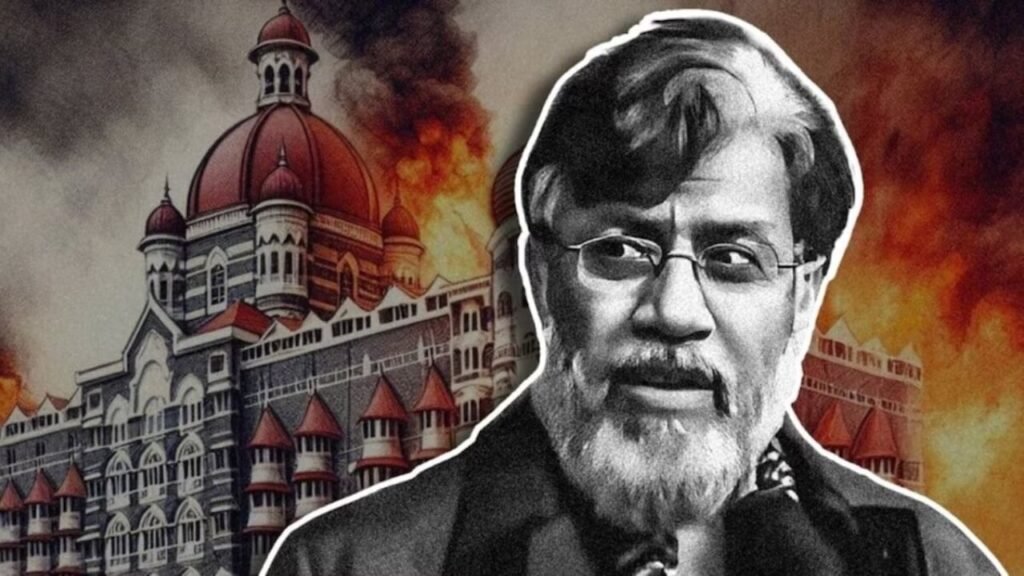
The 26 November 2008 Mumbai attacks were a series of coordinated terrorist assaults lasting four days across 12 locations in Mumbai, including the Taj Hotel, Oberoi Trident, Nariman House, and Chhatrapati Shivaji Maharaj Terminus. The 10 attackers came by sea from Karachi. Nine attackers were killed; the sole surviving attacker Mohammed Ajmal Kasab was captured, tried, and executed in November 2012. The attacks were planned by Lashkar-e-Taiba (LeT) with alleged support from Pakistan’s Inter-Services Intelligence (ISI).
Legal Dimensions: Extradition Law
India and Canada have an Extradition Treaty that generally allows transfer of accused persons between the two countries. However, extradition is subject to: the double criminality rule (offence must be a crime in both countries); the political offence exception; fair trial guarantees; and the death penalty bar (Canada does not extradite to countries where the accused may face death penalty without assurances). Revoking citizenship removes Canadian constitutional protections, potentially smoothing the path for extradition to India or the US.
📝 Practice Quiz — 5 MCQs
Answers with detailed explanations
📝 Practice Quiz — 5 MCQs
Answers with detailed explanations