
Introduction
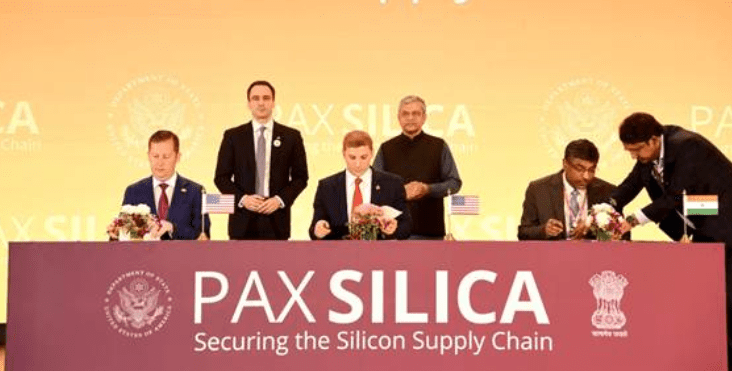
India formally signed the ‘Pax Silica Declaration’ on 25 February 2026, joining a United States-led multilateral alliance aimed at securing supply chains for critical minerals — the building blocks of modern technology and the clean energy transition. The move marks another step in India’s deepening strategic alignment with the US-led technology and economic order.
What Are Critical Minerals?
Critical minerals are elements deemed essential for modern economies but subject to supply chain risks. The list includes: Lithium and Cobalt (batteries for EVs), Rare Earth Elements (17 elements used in wind turbines and EV motors), Gallium and Germanium (semiconductors), Graphite (batteries), and Silicon (solar panels, chips). China currently dominates — processing over 90% of rare earth elements globally.
Why Does This Matter for India?
India has significant reserves — an estimated 6 million tonnes of lithium deposits discovered in J&K’s Reasi district in 2023. However, India lacks processing capacity. Joining Pax Silica means: access to allied supply chains; investment in domestic processing; strategic counterbalancing of China; and alignment with the Mineral Security Partnership (MSP) launched in 2022.
Geopolitical Dimensions
The alliance is part of a broader US strategy to reduce dependence on China — often called ‘friend-shoring’. India’s participation strengthens the Quad partnership. It also raises questions about India’s traditional strategic autonomy, signalling a pragmatic shift.
📝 Practice Quiz — 5 MCQs
Answers with detailed explanations
📝 Practice Quiz — 5 MCQs
Answers with detailed explanations