
Introduction
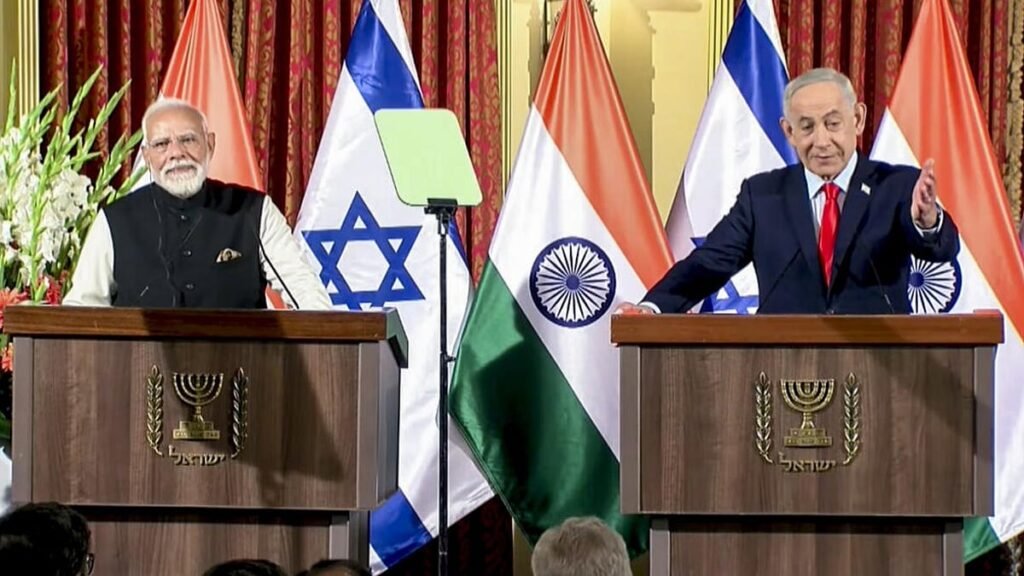
Prime Minister Narendra Modi undertook a high-profile state visit to Israel on 25 February 2026, making it one of the most significant diplomatic engagements of the year in India’s foreign policy calendar. The visit comes at a time when the Middle East continues to witness geopolitical turbulence following the 2023-24 Gaza conflict, and India finds itself navigating complex relationships with both Israel and Arab nations simultaneously.
Background: India-Israel Relations
India and Israel established full diplomatic relations in January 1992 under Prime Minister P.V. Narasimha Rao, ending decades of Cold War-era distance. Since then, bilateral ties have grown exponentially — today, Israel is one of India’s top defence suppliers, providing advanced weapons systems, drones, missile technology, and surveillance equipment.
The two countries also share robust partnerships in agriculture (drip irrigation technology), water management, cybersecurity, and space. PM Modi became the first Indian Prime Minister to visit Israel in July 2017, a watershed moment in bilateral history. The current 2026 visit builds on that foundation.
Key Agenda Items
The visit focused on four pillars: (1) Defence & Security — reviewing ongoing contracts for weapons platforms and intelligence-sharing mechanisms; (2) Technology & Innovation — expanding the India-Israel Industrial R&D and Technological Innovation Fund (ITIF); (3) Humanitarian Aid — India’s position on civilian welfare in ongoing conflict zones; and (4) Trade — bilateral trade crossed USD 10 billion in 2024, with targets set for USD 15 billion by 2028.
Strategic Significance
Israel’s advanced defence technology is critical to India’s Atmanirbhar Bharat (self-reliance) goals in the defence sector. The partnership also has an intelligence dimension — both nations face threats from state-sponsored terrorism. India’s balancing act of maintaining ties with Israel while sustaining its historical support for the Palestinian cause and keeping Gulf nations on side reflects India’s ‘strategic autonomy’ doctrine under its foreign policy.
📝 Practice Quiz — 5 MCQs
Answers with detailed explanations
📝 Practice Quiz — 5 MCQs
Answers with detailed explanations