
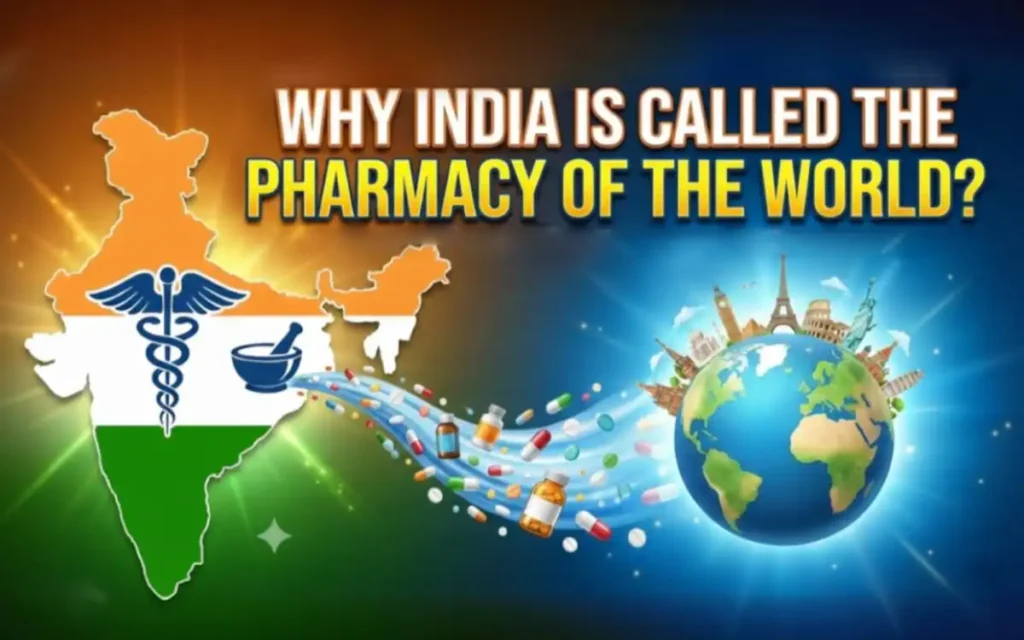
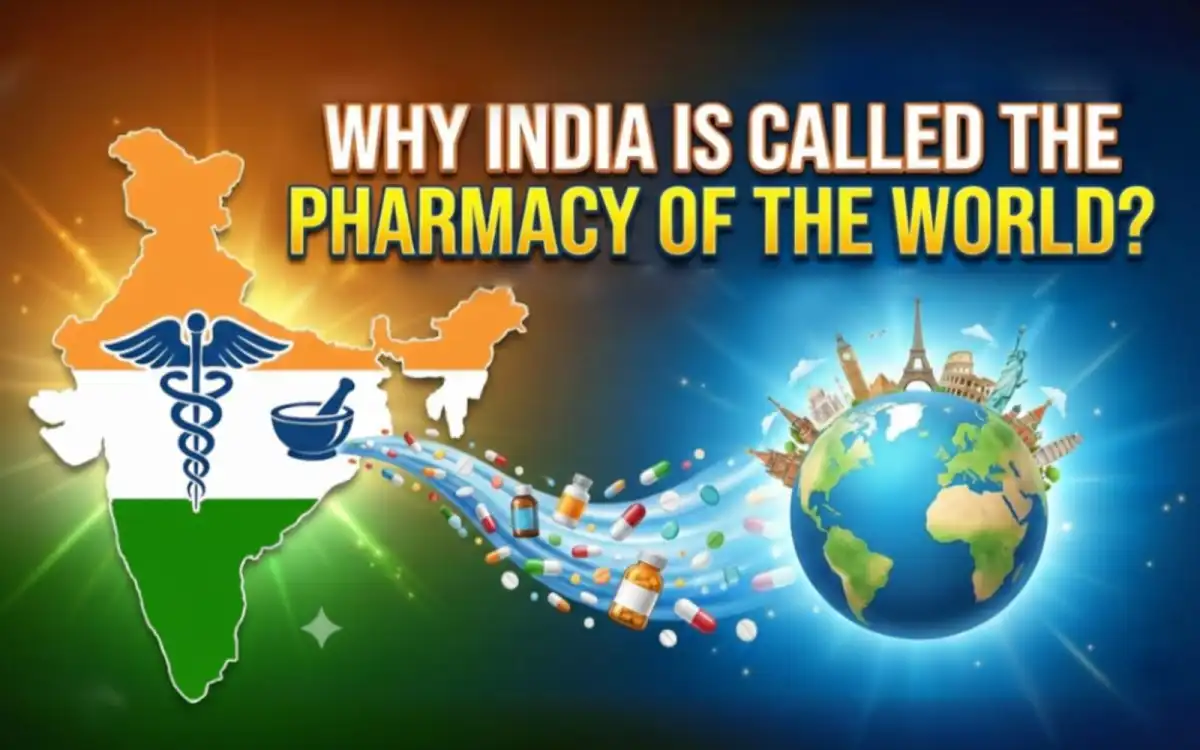
India as the ‘World’s Pharmacy
From Volume Manufacturing to Value Creation
(Pharmaceutical Policy, Innovation Ecosystem and Global Trade | CUET 2026 Analytical Brief for CUET Gurukul)
Introduction
India has long been described as the “world’s pharmacy.” It produces nearly 60% of global vaccines, supplies affordable generics across more than 200 countries, and operates over one-third of USFDA-approved manufacturing facilities outside the United States. Indian pharmaceutical exports have played a transformative role in reducing global HIV/AIDS and tuberculosis mortality.
However, the global pharmaceutical landscape is changing. The challenge now is not scale alone, but value — shifting from high-volume generic manufacturing to innovation-led growth, biologics, research, and advanced therapeutics. The article argues that India must transition from being a volume leader to becoming a value leader.
For aspirants preparing under CUET Current affairs 2026 and Current Affairs 2026, this issue intersects industrial policy, intellectual property law, global trade negotiations, innovation economics, and public health governance. Students enrolled in the best online coaching for CUET and online coaching for CUET should examine the constitutional, economic, and geopolitical dimensions.
Why in News
- India’s pharmaceutical industry continues to dominate global generic markets.
- Global trade tensions, including US tariff measures, are reshaping supply chains.
- India aims to increase pharmaceutical exports to $350 billion by 2047.
- There is growing pressure to move up the value chain into innovation, biologics, and research-intensive segments.
- Trade negotiations with the US highlight structural vulnerabilities.
Point-wise Summary of the Article
- India’s Pharmaceutical Achievements
- Produces 60% of global vaccines.
- Supplies medicines to over 200 countries.
- Operates more than one-third of USFDA-approved facilities outside the US.
- Helped reduce global AIDS and TB mortality significantly.
- Saved global patients over $2 trillion in the last decade.
India’s generics revolution transformed global access to medicines.
- Policy Foundations of Success
India’s rise was enabled by:
- The Indian Patents Act, 1970.
- Process patents (instead of product patents).
- Weakening of monopoly pricing by multinational corporations.
- Entrepreneurial public policy.
The 1984 Hatch-Waxman Act in the US also accelerated generic competition.
- Entrepreneurial Policy Leadership
The article credits:
- Policy visionaries.
- Indian pharma entrepreneurs like:
- Yusuf Hamied (Cipla),
- Dilip Shanghvi (Sun Pharma),
- P.V. Ramprasad Reddy (Dr Reddy’s),
- Others who built global brands.
Policy entrepreneurship aligned affordability with industrial growth.
- India’s Shift from Volume to Value
Currently:
- India produces 60% of global medicines by volume.
- Accounts for only about 5% of global pharmaceutical sales by value.
The goal:
- Reach $350 billion in pharma exports by 2047.
- Increase innovation, biologics, and high-value drugs.
- Five Opportunities Identified
- Generics (continued leadership).
- Biologics.
- Innovation-led research.
- Domestic market growth.
- Contract manufacturing and research services.
- Five Key Challenges
- Science and research ecosystem gaps.
- Risk capital ecosystem weakness.
- Ease of doing business hurdles.
- Competition from China.
- Trade barriers and regulatory complexities.
- China’s Competitive Model
China’s leverage stems from:
- Massive investment in science and research.
- State-backed industrial strategy.
- Ability to scale from manufacturing to innovation.
- Strong domestic demand.
China accounts for one-third of newly licensed drugs.
- India’s Structural Gaps
- Lower per capita income compared to China.
- Lower R&D investment intensity.
- Risk-averse capital markets.
- Regulatory delays.
India must build complex complementary strengths.
- Trade and Geopolitics
- US tariff discussions affect India’s pharmaceutical exports.
- Trade negotiations reveal vulnerability.
- Economic security requires domestic capability.
- Policy Prescription
India must:
- Invest heavily in science and research.
- Reduce regulatory burdens.
- Strengthen university-industry collaboration.
- Improve capital markets for biotech startups.
- Build global trust through quality and compliance.
Legal and Policy Analysis for CUET 2026
- Patent Law and Public Health
The Indian Patents Act, 1970 allowed:
- Process patents instead of product patents.
- Enabled reverse engineering of drugs.
- Lowered drug prices.
Later amended to comply with TRIPS (WTO obligations).
- TRIPS Agreement
- WTO agreement on intellectual property.
- Required India to introduce product patents in 2005.
- Balanced innovation incentives with public health needs.
- Hatch-Waxman Act (1984)
US law encouraging:
- Faster generic drug approvals.
- 180-day exclusivity for first generic filer.
- Innovation vs Access Debate
Balancing:
- Affordable medicines.
- Incentives for innovation.
- Ethical considerations in life-saving drugs.
Economic Transition: From Cost Arbitrage to Knowledge Arbitrage
India’s early advantage:
- Low-cost manufacturing.
- Skilled but affordable workforce.
Future advantage must include:
- Research ecosystems.
- Clinical trials infrastructure.
- Biotech innovation hubs.
- AI-driven drug discovery.
Strategic Implications
- Economic Security
Pharma supply chains are strategic assets.
COVID-19 exposed vulnerabilities in global supply chains.
- Soft Power
Affordable medicines enhanced India’s global standing.
- Innovation Ecosystem
Universities must become research anchors.
Public-private partnerships must deepen.
Critical Evaluation
Strengths
- Strong generics foundation.
- Skilled human capital.
- Global regulatory credibility.
Weaknesses
- Limited high-end innovation.
- Low R&D spending.
- Capital constraints.
Key Insight
India’s pharma story cannot rely solely on volume. It must pivot to value creation without compromising affordability.
Implications for CUET 2026
This topic may generate:
- Legal Reasoning questions on patent law.
- GK questions on TRIPS.
- Public policy debates on innovation vs access.
- Questions on economic nationalism vs global trade.
Under CUET Current affairs 2026, it integrates:
- Constitutional goals (Article 47: Public Health).
- Trade policy.
- Intellectual property law.
Students enrolled in the best online coaching for CUET and online coaching for CUET should frame arguments balancing affordability and innovation.
Conclusion
India’s pharmaceutical industry has demonstrated the power of policy entrepreneurship aligned with social objectives. However, the next frontier lies in shifting from manufacturing scale to innovation depth. Success will require sustained investment in research, capital market reform, regulatory efficiency, and global trust-building.
The transition from “world’s pharmacy” by volume to “world’s pharmacy” by value will define India’s pharmaceutical destiny in the coming decades.
For Current Affairs 2026, this case illustrates how industrial policy, intellectual property law, and global trade intersect in shaping national competitiveness.
Notes: Explanation of Peculiar Terms
- Generics: Drugs equivalent to branded medicines after patent expiry.
- Biologics: Complex drugs derived from living organisms.
- Process Patent: Protects method of manufacturing, not the product itself.
- Product Patent: Protects the final drug molecule.
- TRIPS: WTO agreement governing intellectual property.
- Hatch-Waxman Act: US law facilitating generic drug competition.
- Risk Capital: Investment in high-risk, innovation-driven ventures.
- Contract Research Manufacturing Services (CRAMS): Outsourcing pharma research/manufacturing.
- Value Chain Upgradation: Moving to higher-value production stages.
- Soft Power: Influence through diplomacy and humanitarian contribution.