
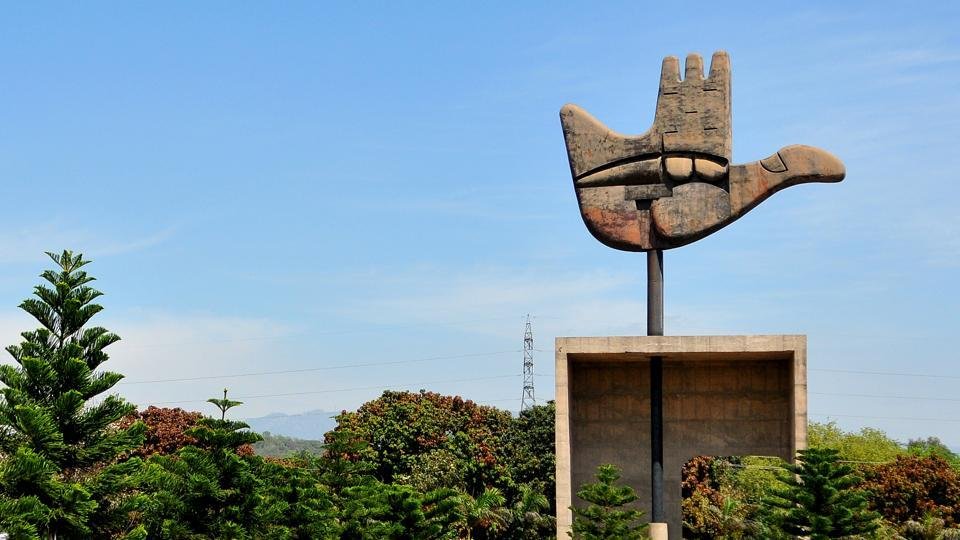
Chandigarh at 75
Planned Modernism, Urban Paradox and the Limits of Elite Design
(Urban Governance, Planning Ideology and Democratic Accountability | CUET 2026 Analytical Brief for CUET Gurukul)
Introduction
As Chandigarh completes 75 years, the city stands as both a celebrated symbol of post-independence modern India and a contested example of elite-driven urban planning. Conceived as India’s first planned modern city, Chandigarh was designed to embody rationality, order, and architectural excellence. Yet, behind its iconic geometry lies a deeper debate about social hierarchy, democratic accountability, environmental stress, and urban inclusivity.
The article presents Chandigarh as a paradox — admired for its design, yet critiqued for institutional fatigue, spatial segregation, and administrative complexity. For aspirants preparing under CUET Current affairs 2026 and Current Affairs 2026, this issue offers a valuable case study in governance, decentralisation, public administration, urban constitutionalism, and socio-spatial justice. Students enrolled in the best online coaching for CUET and online coaching for CUET must approach this topic analytically rather than sentimentally.
Why in News
- Chandigarh has completed 75 years since its founding as an independent India’s planned capital.
- Public discourse has revisited its planning philosophy and governance model.
- Urban scholars have raised concerns about:
- Administrative stagnation.
- Environmental stress.
- Social segmentation.
- The anniversary invites reflection on whether preservation alone is sufficient without reform.
Point-wise Summary of the Article
- Chandigarh as a Political Dilemma
- Chandigarh is celebrated as a landmark of Indian modernity.
- It reflects Western planning aesthetics.
- It was envisioned as a symbol of Nehruvian optimism and rational governance.
- Yet, it reveals deep social hierarchies and uneven development.
- Not One City, But Two
The article argues that Chandigarh functions as:
- A heritage city admired for order and aesthetics.
- A living city facing decay, institutional fatigue, and structural inequality.
Elite residential sectors were placed near the Capitol Complex, while:
- Service workers.
- Lower-level staff.
- Informal labourers.
Were pushed to peripheral areas outside the planned grid.
This spatial design quietly structured class-based segregation.
- Structural Privilege and Maintenance Bias
- Maintenance favoured original planned sectors.
- Peripheral zones experienced deterioration.
- Housing obsolescence and ageing infrastructure are visible.
- Administrative concentration increased institutional fatigue.
Thus, decay is not accidental but structural.
- Rock Garden as Democratic Intervention
- Created secretly by Nek Chand over two decades.
- Built from industrial and domestic waste.
- Located near Sukhna Lake.
- Authorities initially declared it illegal.
- Public protest prevented demolition.
- Eventually integrated into city planning.
The Rock Garden symbolizes citizen-led correction of elite planning.
- Green City Myth Under Scrutiny
Chandigarh is often called a “green city.”
However:
- Rose Garden prioritises visual aesthetics.
- Sukhna Lake requires artificial maintenance.
- Rising temperatures and water stress challenge its design assumptions.
- Environmental sustainability was secondary to spectacle.
- Dual Governance Structure
Chandigarh is a Union Territory with:
- Unelected UT Administration controlling planning, land use, heritage regulation.
- Elected Municipal Corporation managing limited civic services.
This overlap creates:
- Blurred accountability.
- Slow decision-making.
- Administrative anomalies.
- Structural Outcome of Elite Modernism
The article concludes that Chandigarh’s challenges are not managerial accidents.
They stem from:
- A top-down modernist planning ideology.
- Insulation from democratic correction.
- Limited citizen participation.
The city risks becoming a preserved museum rather than a living, adaptive space.
Urban Governance Themes Relevant for CUET 2026
- Planned Cities and Constitutional Democracy
Planned capitals often reflect centralised authority:
- Brasília (Brazil).
- Canberra (Australia).
- Chandigarh (India).
Such cities struggle with adapting formal design to informal realities.
- Democratic Accountability
Urban governance requires:
- Clear institutional responsibility.
- Citizen participation.
- Transparent decision-making.
Chandigarh’s dual system complicates this.
- Socio-Spatial Justice
Urban planning influences:
- Who lives where.
- Access to services.
- Economic mobility.
Chandigarh’s sector design embedded hierarchy.
- Environmental Sustainability
Climate change exposes structural design weaknesses:
- Rising temperatures.
- Water stress.
- Artificial lakes requiring maintenance.
Long-term resilience requires redesign, not mere preservation.
Legal and Constitutional Dimensions
- Union Territory Governance
Under Article 239:
- Union Territories are administered by the President through an Administrator.
- Limited legislative autonomy compared to states.
Chandigarh’s governance reflects this model.
- Decentralisation and 74th Constitutional Amendment
The 74th Amendment aimed to:
- Strengthen urban local bodies.
- Enhance democratic participation.
Chandigarh’s structure raises questions about incomplete decentralisation.
- Right to the City (Emerging Doctrine)
While not explicitly constitutional, courts increasingly interpret:
- Article 21 (Right to Life) to include:
- Livable environment.
- Housing dignity.
- Inclusive urban access.
Critical Analysis
Strengths of Chandigarh Model
- Architectural coherence.
- Sectoral planning efficiency.
- Orderly infrastructure grid.
- Strong heritage identity.
Weaknesses
- Social segregation.
- Peripheral neglect.
- Environmental artificiality.
- Bureaucratic overlap.
- Limited democratic responsiveness.
Core Insight
Chandigarh’s decay is not accidental. It is the structural outcome of elite modernist planning insulated from democratic correction.
Comparative Urban Lessons
- Planned cities must evolve.
- Heritage conservation should not fossilise governance.
- Citizen-led interventions (Rock Garden) reveal organic resilience.
- Urban design must incorporate social equity from inception.
Implications for CUET Aspirants
This topic may generate questions under:
- Constitutional Law (Union Territories, decentralisation).
- Public Policy.
- Environmental governance.
- Socio-economic justice.
- Legal reasoning (balancing design vs democratic adaptation).
Under CUET Current affairs 2026, it exemplifies intersectional governance analysis.
Students in the best online coaching for CUET and online coaching for CUET should frame arguments both from preservationist and reformist perspectives.
Conclusion
At 75, Chandigarh symbolizes both aspiration and limitation. It represents India’s early confidence in rational planning but also exposes the blind spots of technocratic modernism. The city’s future depends not on static preservation but on adaptive reform — integrating environmental resilience, democratic accountability, and social inclusion.
The central question is no longer whether Chandigarh was well planned, but whether it can learn to change.
For Current Affairs 2026, this case underscores that governance must remain dynamic, participatory, and constitutionally grounded.
Notes: Explanation of Peculiar Terms
- Modernist Planning: Architectural philosophy emphasising order, geometry, and functional zoning.
- Capitol Complex: Administrative centre of Chandigarh housing key government buildings.
- Sector Planning: Division of city into self-contained rectangular units.
- Institutional Fatigue: Administrative stagnation and bureaucratic overload.
- Dual Governance: Two overlapping administrative authorities managing same territory.
- Urban Obsolescence: Infrastructure becoming outdated.
- Socio-Spatial Segregation: Physical separation of social classes within city layout.
- 74th Constitutional Amendment: Amendment strengthening urban local governance.
- Right to the City: Normative principle advocating inclusive urban access.